If you use CPAP and mouth tape, you may have noticed something strange.
You close your lips. The machine is running. And suddenly your cheeks puff, air builds in your mouth, or the tiniest gap in your lips causes air to rush out.
It can feel like pressure is building up in your mouth instead of going down your airway.
This post explains what is usually happening, in plain English, without medical jargon.
First: CPAP uses positive pressure
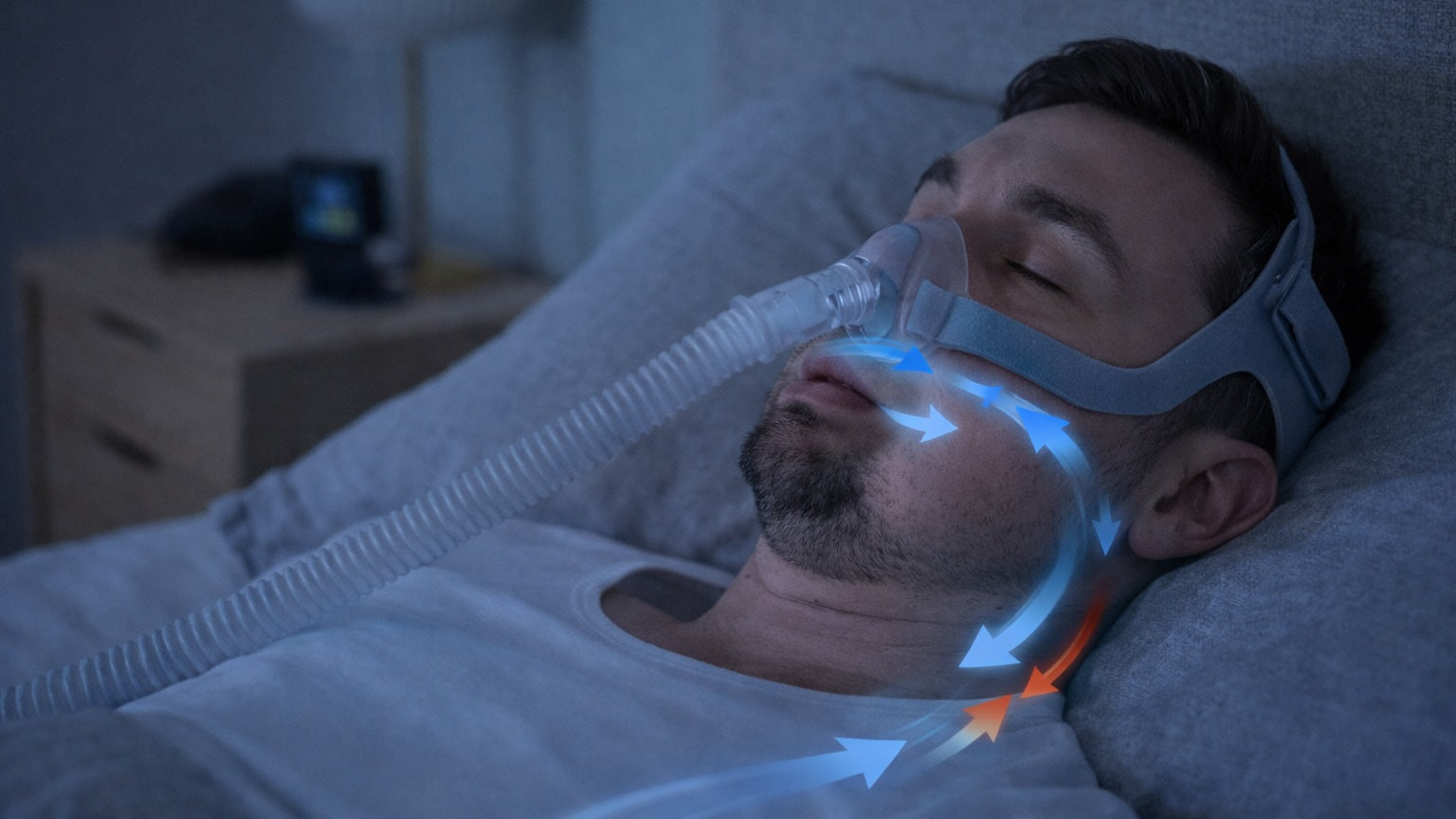
CPAP delivers air under positive pressure through your nose to help keep the airway open during sleep. That pressure fills the nasal passages and the space behind the nose (the nasopharynx).
From there, air should move down the throat and into the lungs.
However, the upper airway is not a rigid pipe. It is soft tissue that moves and changes shape while you sleep. That matters.
The airway is not a fixed pipe system
Many people imagine airflow like plumbing. If pressure is applied to the nose, it should simply equalise throughout the connected system.
But the nose, throat, soft palate, tongue, and mouth are dynamic tissues. Small changes in tongue position or lip seal can change where pressure distributes.
Under CPAP, pressure tends to follow the pathway of least resistance. If the lips part even slightly, or if the soft palate does not fully seal, some of that pressure can redistribute into the mouth.
When that happens, you can get:
- Oral cavity pressurising
- Cheeks puffing
- Air leaking out through the smallest lip gap
- Dry mouth (because air is venting through the mouth)
This is often referred to as mouth leak.
Does this mean something is wrong with your sinuses?
Not necessarily.
If you can comfortably breathe through your nose during the day with your mouth closed, this is often more about pressure dynamics and soft tissue position during sleep than sinus disease.
That said, if nasal breathing is restricted (especially at night), nasal resistance can contribute to pressure redistributing toward the mouth because the mouth becomes an easier exit route.
If you are unsure about your nasal airflow or CPAP therapy, it is worth discussing with your healthcare provider.
Why tongue position can change everything
The tongue plays a surprisingly important role in upper airway mechanics.
In relaxed nasal breathing, the tongue typically rests gently against the roof of the mouth, with the tip just behind the upper front teeth.
When the tongue is elevated and lightly spread against the palate, it can:
- Support the soft palate
- Reduce the space in the oral cavity
- Help keep airflow dominance nasal rather than oral
If the tongue drops toward the base of the mouth, the geometry and resistance of the airway changes. Under CPAP, that can influence whether air stays directed down the airway or redistributes into the mouth.
Small shifts can feel dramatic because positive pressure amplifies tiny changes in tissue position.
“But air from the nose goes down the back of the throat anyway”
Correct. Air entering through the nostrils naturally travels down the back of the throat. That is normal anatomy.
What feels unusual under CPAP is not the pathway. It is the pressure. If the oral cavity becomes part of the pressurised system due to lip separation or tissue position, you may feel it more intensely and get mouth leak.
Where mouth tape fits
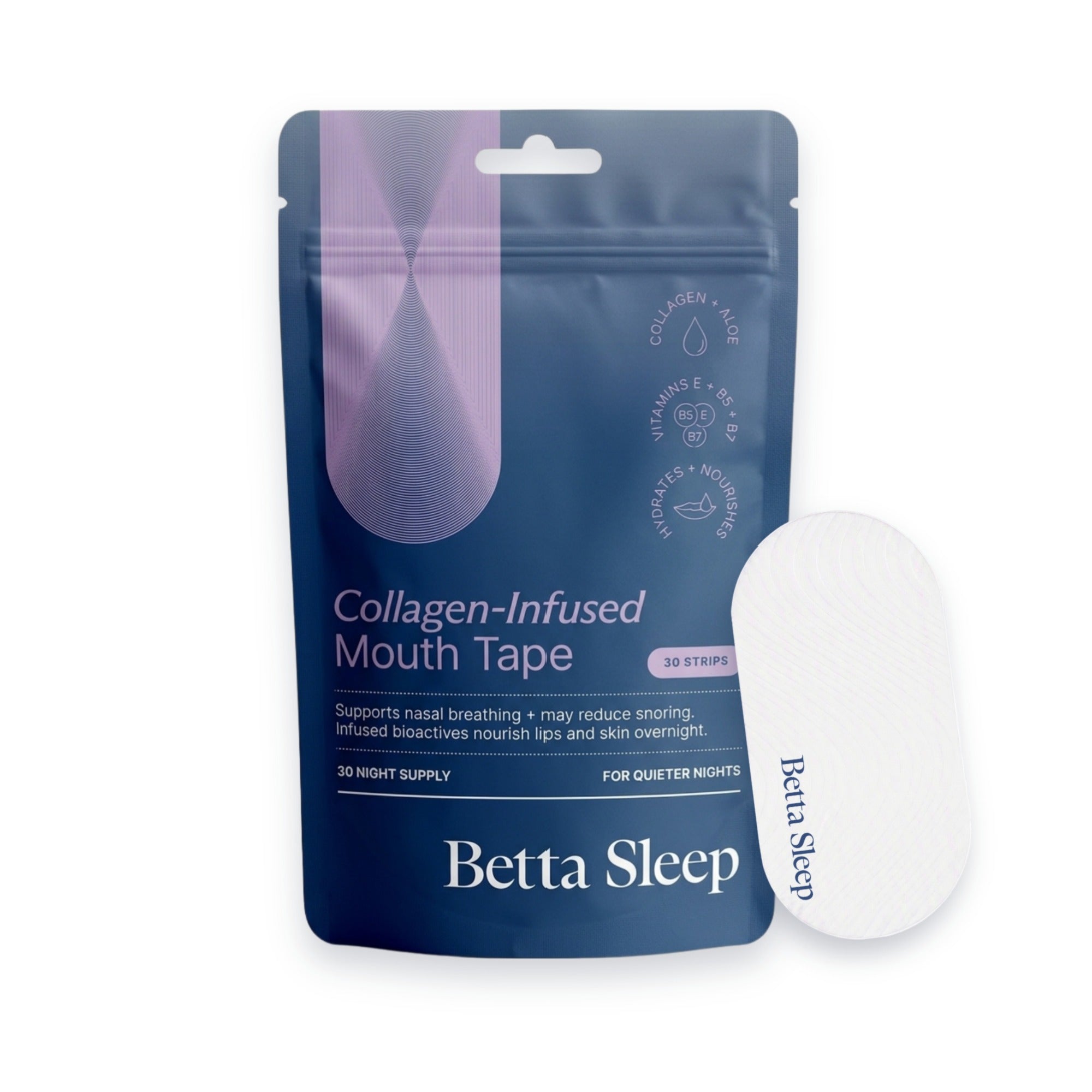
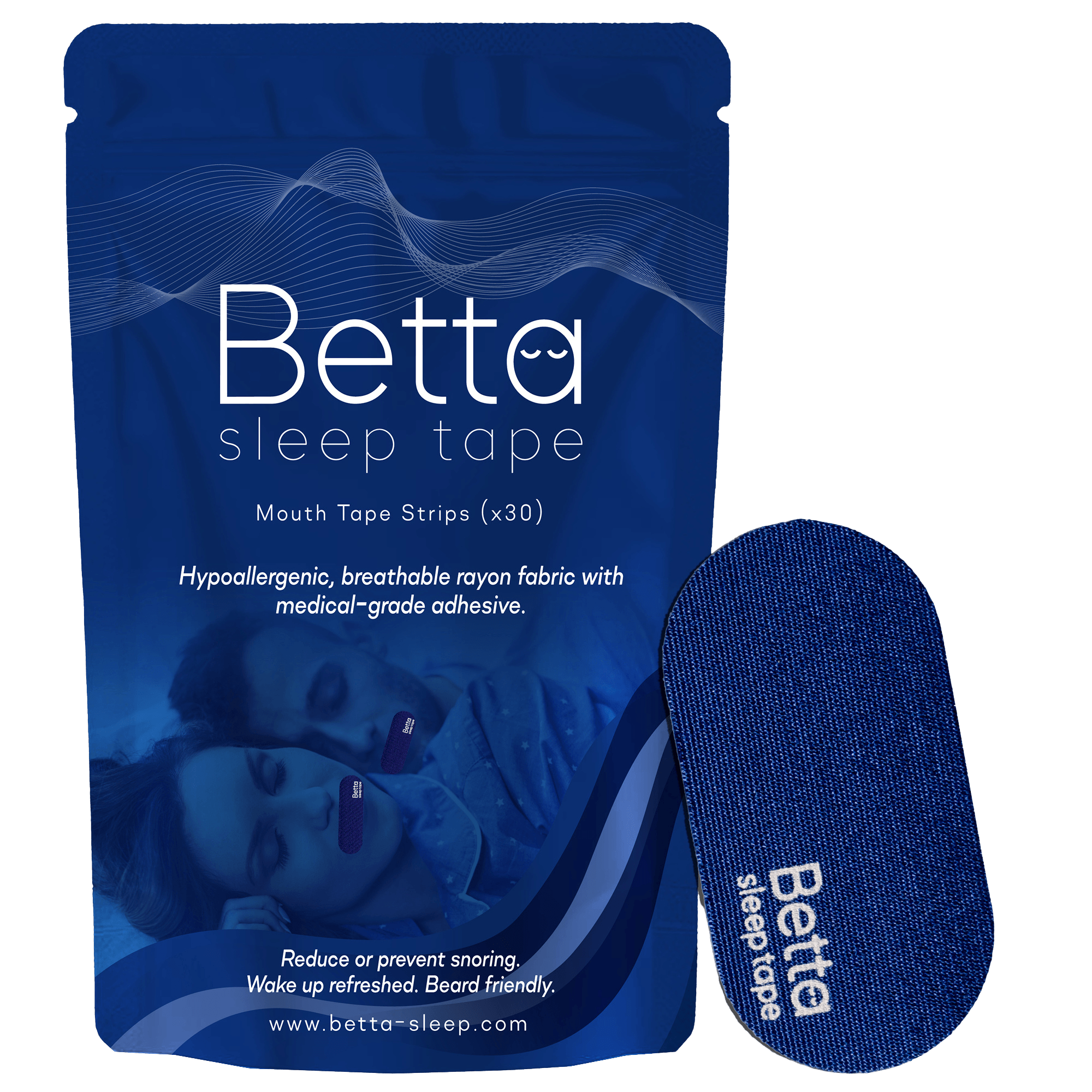
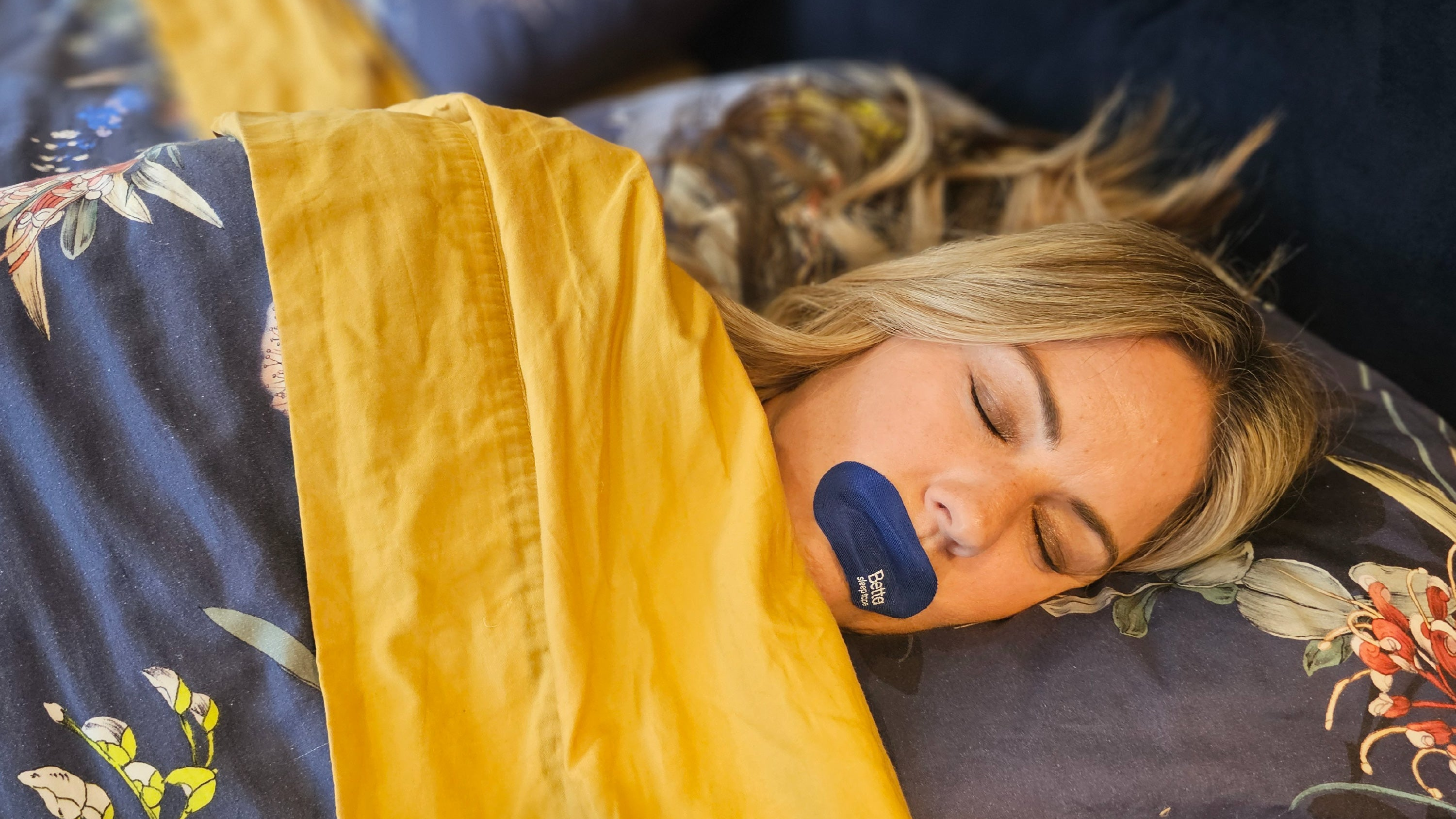
Mouth tape is designed to support nasal breathing by helping keep the lips gently closed. For many CPAP users, that can reduce mouth leak and improve comfort.
However, mouth tape is not a replacement for CPAP, and it does not diagnose or treat underlying sleep conditions. It is simply a support tool for lip seal and nasal breathing habits.
If nasal airflow is limited, or if CPAP therapy is not well optimised, mouth tape may feel uncomfortable or forced. In those situations, a discussion with your CPAP provider is sensible.
Products that can help support nasal breathing
If you are exploring ways to support nasal breathing and reduce mouth leak, these are the two product categories most people start with:
-
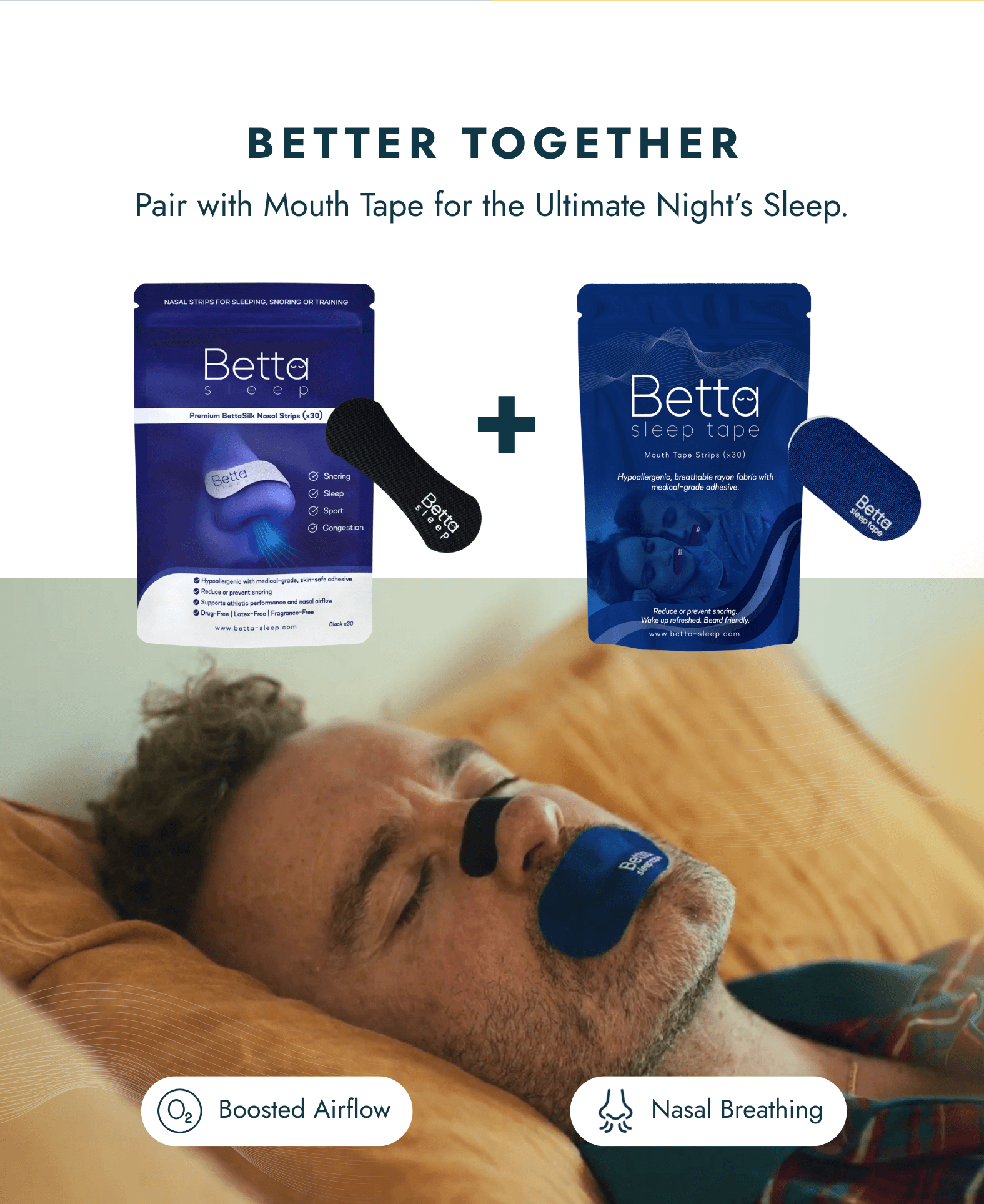
Mouth tape - designed to support lip seal at night.
View Betta Sleep Mouth Tape -
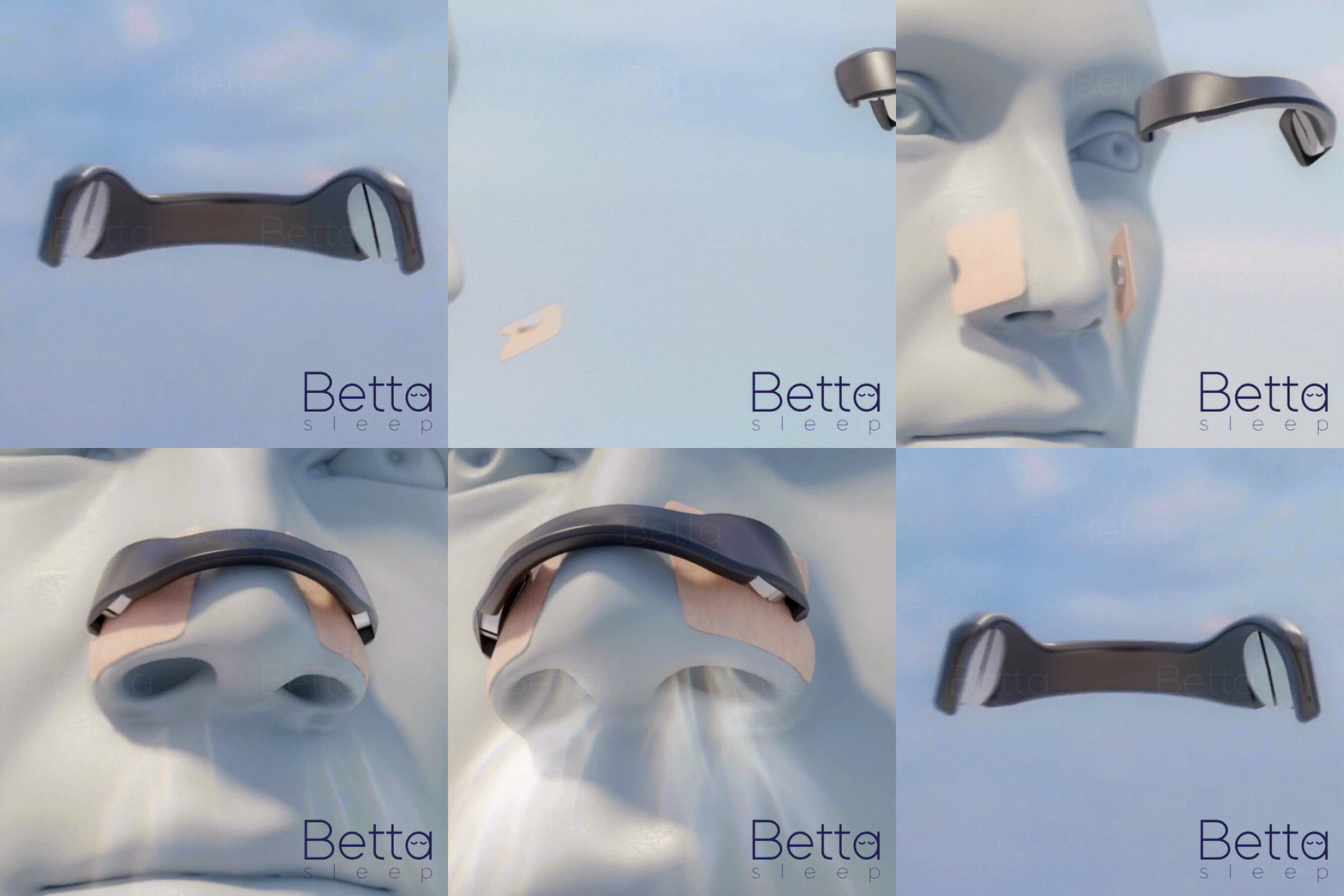
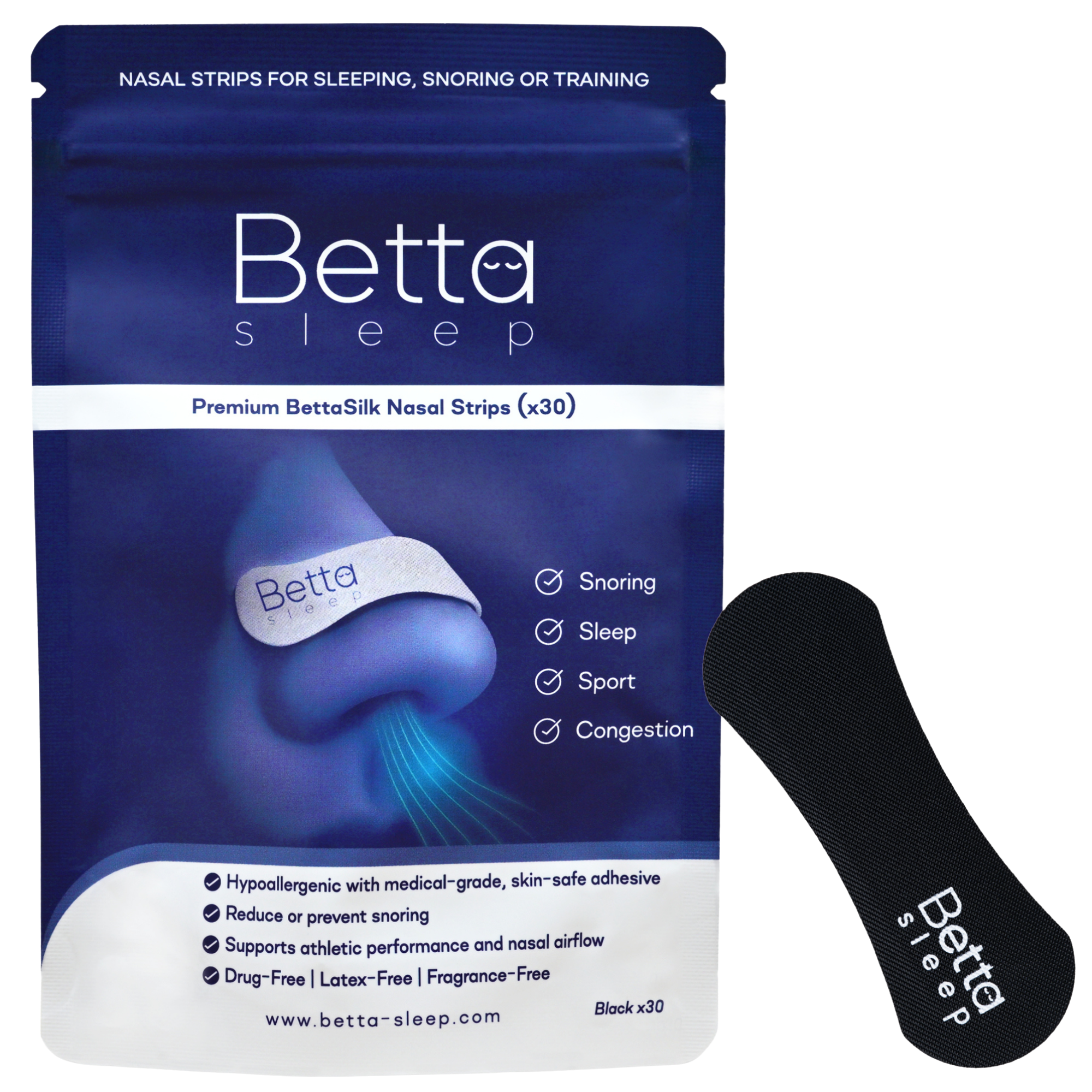
Nasal support - can help if nasal airflow feels restricted at night.
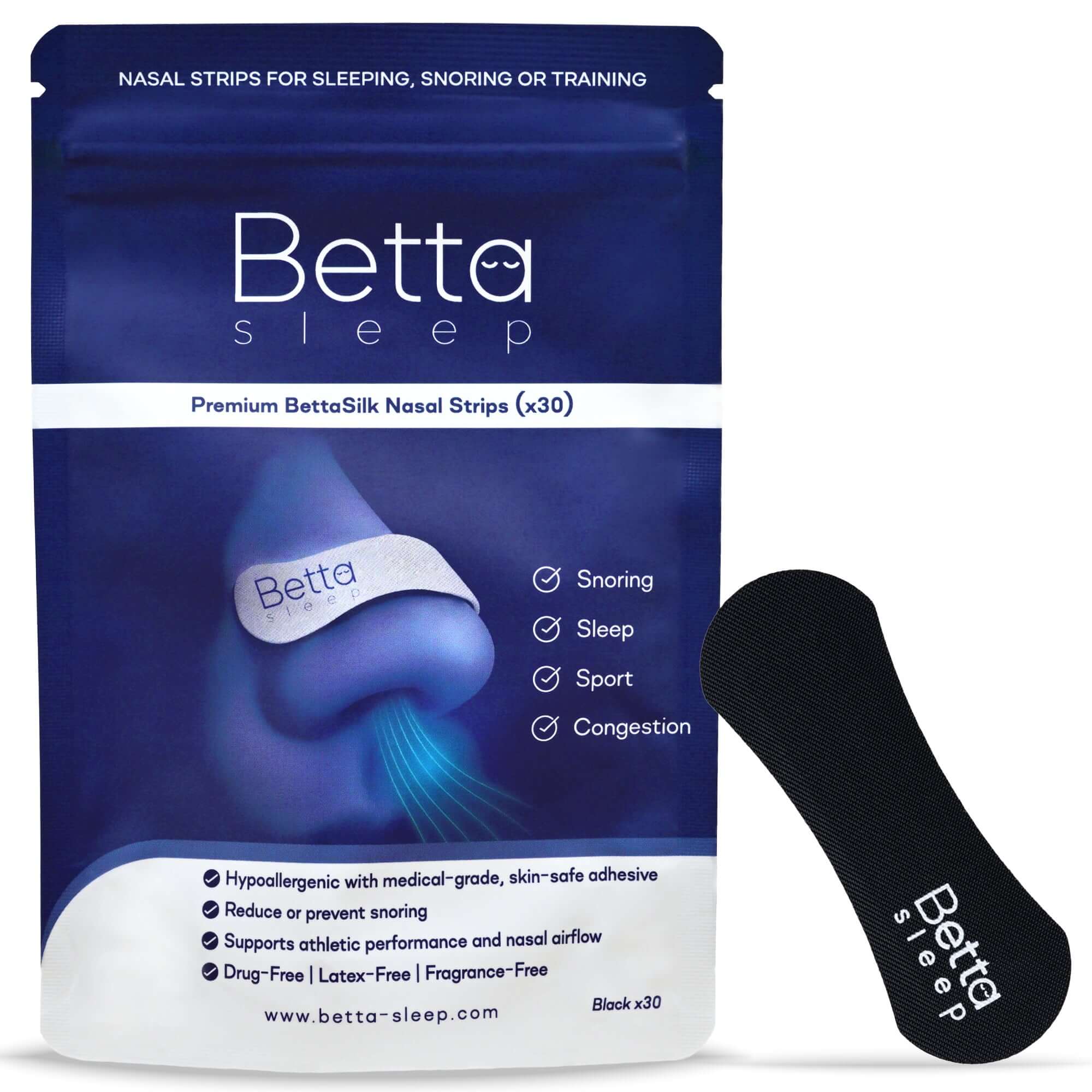
View BettaSilk Nasal Strips -
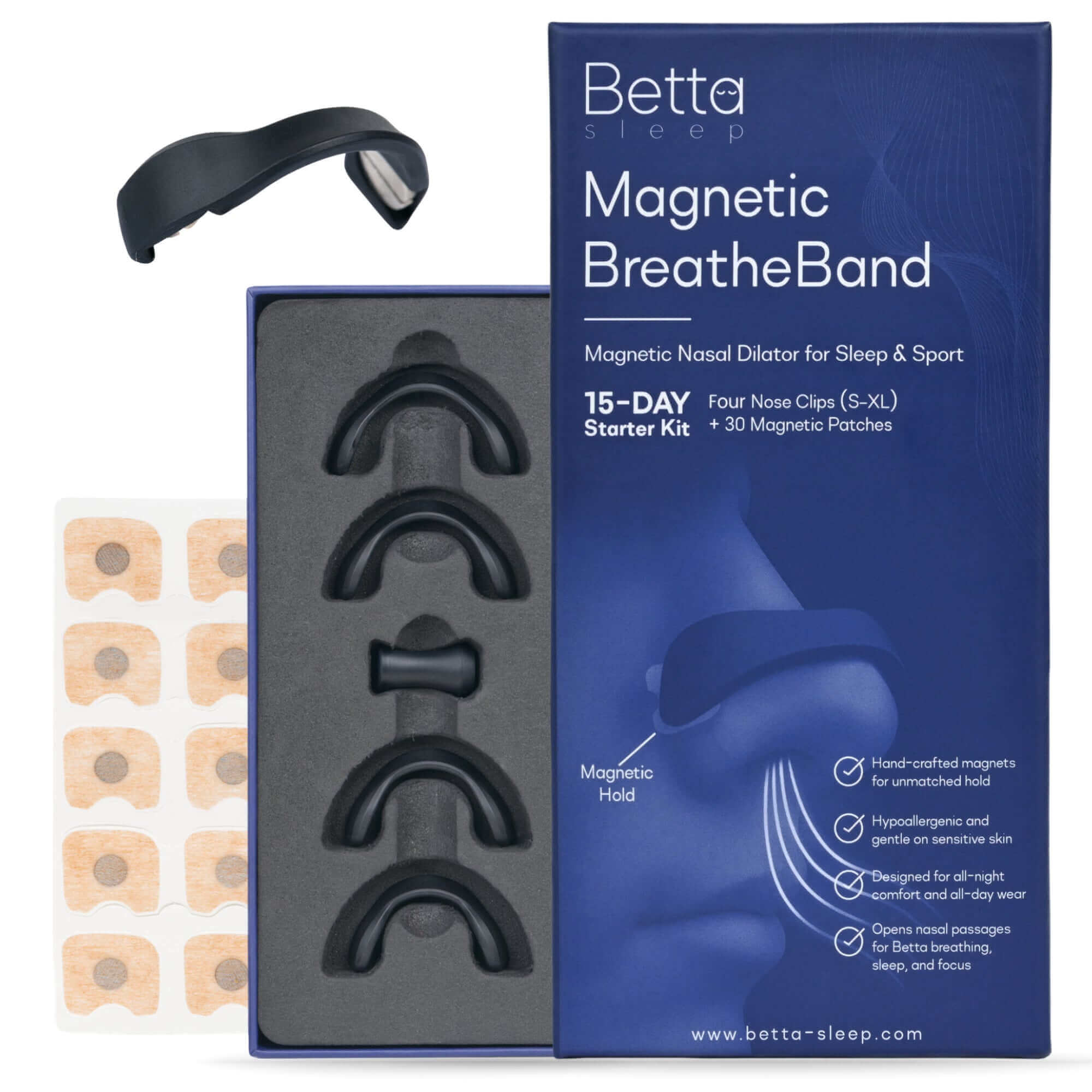
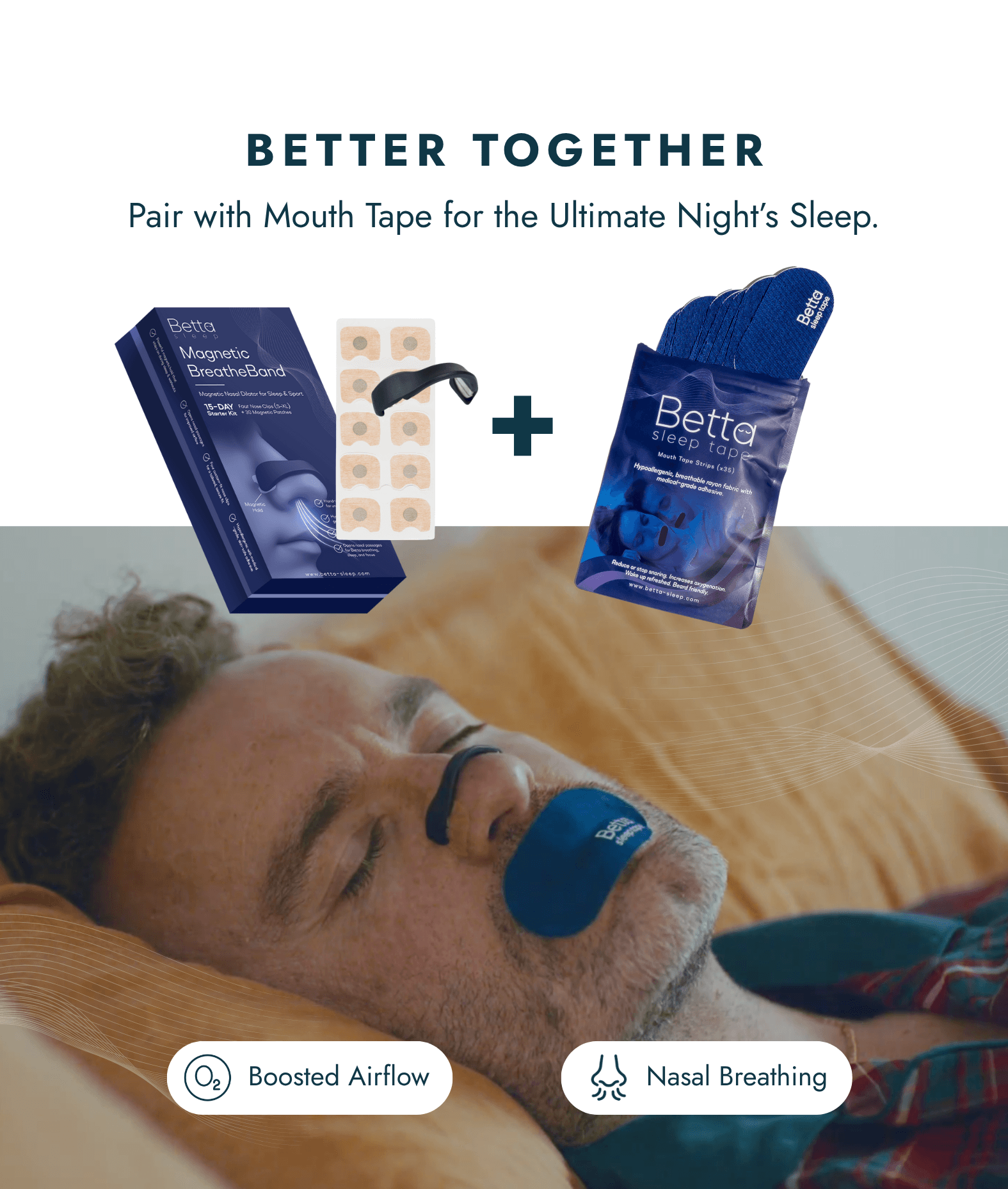
Magnetic nasal support - an option some people use to support airflow.
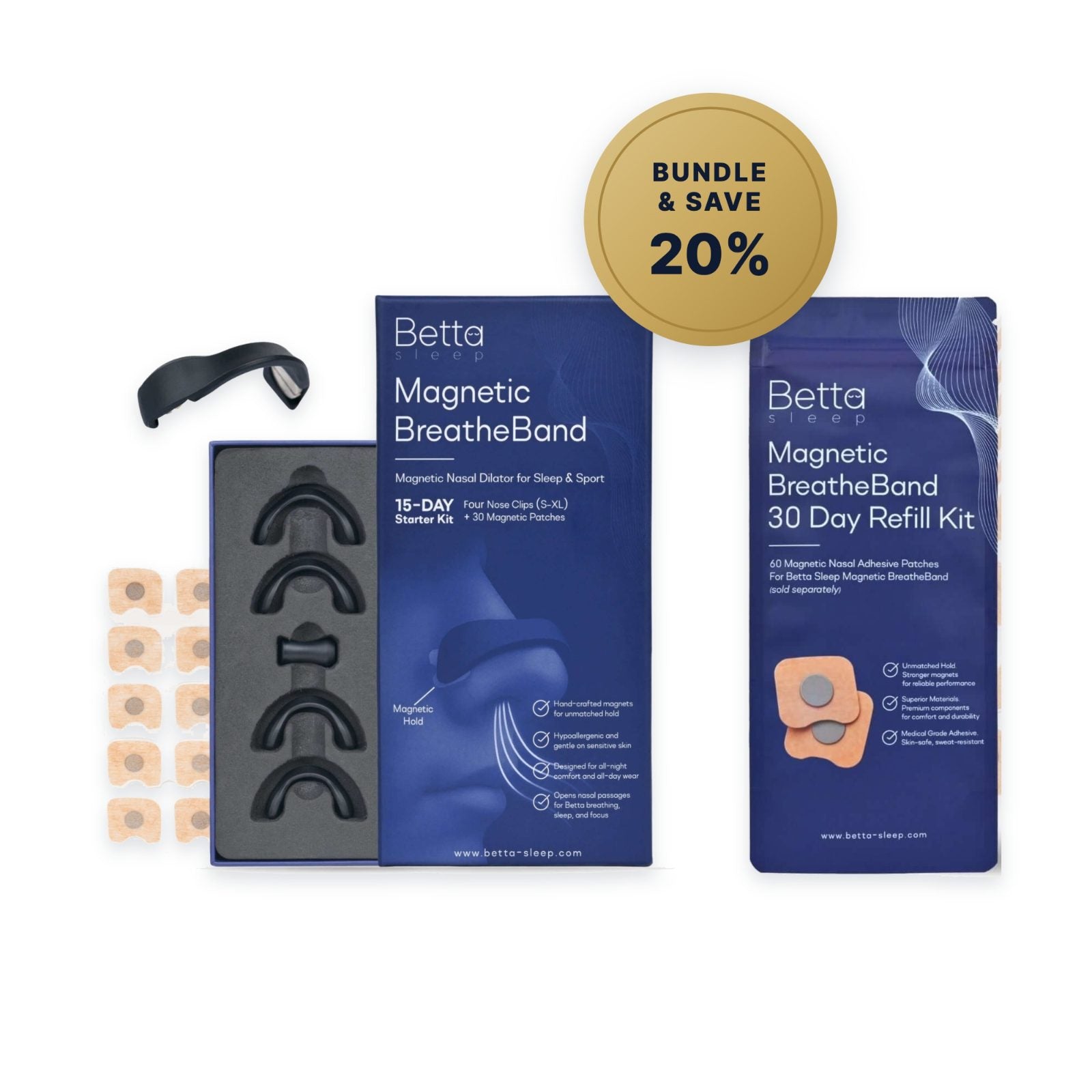
View Magnetic BreatheBand 15 Day Starter Kit
The bigger picture
CPAP therapy, nasal airflow, tongue posture, and lip seal all interact. Because the airway is flexible, small changes can change how pressure behaves.
Understanding the mechanics can make the experience less confusing and help you have better conversations with your provider.
Important note
This article is for general education only. It is not medical advice and is not a substitute for professional care. If you have diagnosed sleep apnoea, persistent discomfort, concerns about CPAP therapy, or symptoms that worry you, speak with your doctor or CPAP provider.